Dear friends,
Last week, Peter answered the question of why he is still a Christian, in terms of the arguments for Christianity found in the person and work of the Lord Jesus Christ. This week, in part 2 of our mini-series, he turns to the more existential answer of the effect that Christianity has in changing life for the better.
This podcast is provided free of charge by the generosity of our friends. If you are a friend who would like to give to this work, the details of how to do so are at the end of this episode’s transcript.
Yours,
Phillip
Phillip Jensen: Last week, we had a great time talking about why you are still a Christian. You talked about why you still believe, having gone through doubts, and having had your doubts answered.
Peter Jensen: Yes. We called that episode Persuasion, because we discussed why I was and remain persuaded. The central answer is, of course, Jesus.
Phillip: ‘Persuasion’ makes you think of Jane Austen, doesn’t it? Do you like reading Jane Austen?
Peter: Yes, of course.
Phillip: I didn’t when I was a young man. I was 17 when I went to university and attended (because I won’t say I studied) English. I was given Jane Austen’s Emma as a compulsory reading. If you want to turn a sports-mad, athletic, outgoing, optimistic young Australian male off reading English literature for life, make him read Emma. But in later years, when I saw some television adaptations of Jane Austen’s novels, I picked them up and read them. That’s when I realised that they’re brilliant, in not so much an argument as an illustration of the complexities and the subtleties of human interrelationships.
So yes, you can be persuaded about the truth of the gospel of the Lord Jesus Christ, but the relationship with Jesus is more than just an intellectual, mathematical, historical argument for the existence of God; it changes the way of life itself. It’s more than just the knowledge that there is a kind of truth out there, so to speak—it’s about the way in which you live.
I once watched an interview between Ayaan Hirsi Ali with Richard Dawkins. Ayaan Hirsi Ali was raised a Muslim, then she became one of Dawkins’ colleagues in the promotion of atheism. But she eventually moved away from atheism and is now professing Christ. In the interview, she challenged Dawkins about the fact that his atheism was unliveable. Leaving aside whether it was true or false, it just didn’t make sense of life itself. And quite fascinatingly, he confessed that she was right. He said that his job was to tell people that Christianity is not true, not to tell you how to live. She said, “That’s the trouble. It’s unliveable what you’re teaching, whereas Christianity is liveable.” So among this clash of worldviews, when you talk about persuasion, you’re saying, “I’ve read that stuff about atheism and it didn’t persuade me at all. But I’ve come across Jesus, and he persuades me.” But what does he persuade you about life that is so liveable?
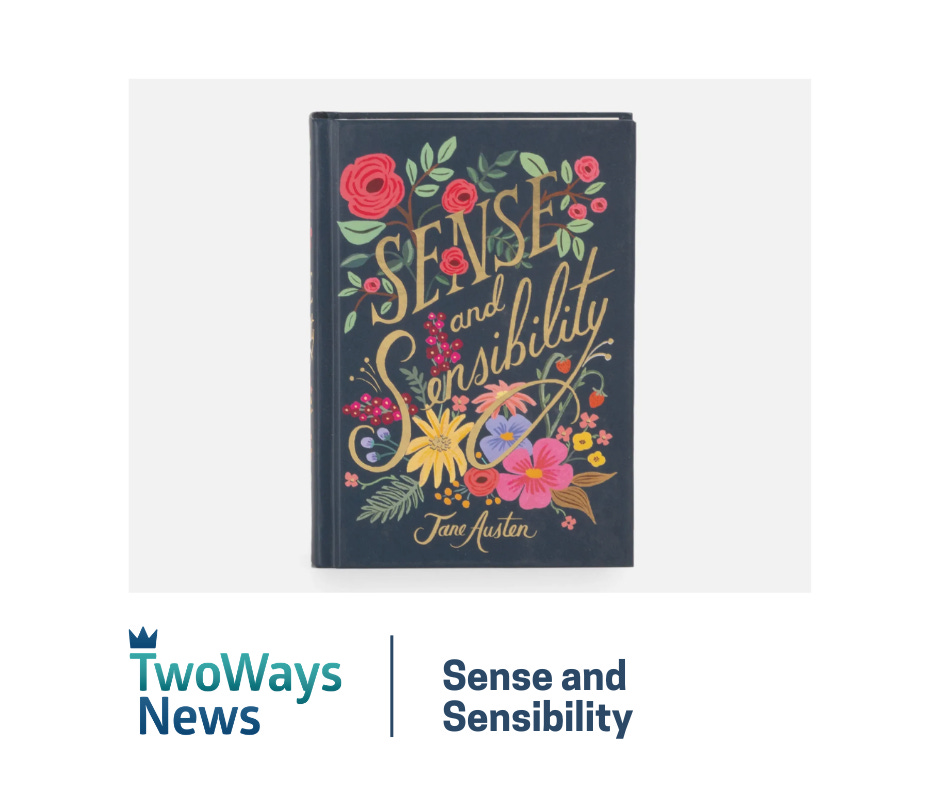
Peter: Something like ‘Sense and Sensibility’, for example.
Phillip: Okay, let’s continue with Jane Austen. What can you learn about ‘Sense and Sensibility’?
Peter: We can learn about both the head and the heart. I would say I remain a Christian because in my experience, the gospel of Jesus Christ addresses our humanity so truthfully and affectively with both wisdom and grace.
Phillip: What do you mean, ‘affectively’?
Peter: I say ‘affectively’ in the sense of the heart. When I talk about the heart, I don’t mean the way your heart becomes enmeshed and makes you irrational. I mean your sense of what it takes to be human.
Phillip: What’s an affect?
Peter: Well, for several years now I’ve been asking professionals such as doctors, clergy, counsellors, school teachers—the people who listen to others in their everyday life—to tell me from their daily experience about the contemporary Australian soul. Some of these people are believers; others aren’t. But I ask, “How is the individual faring in this age?” Naturally, the results don’t constitute a proper survey or anything like that, and they are local to where we are living here in Sydney, but they do cohere with what I’ve read elsewhere. Over the 10 years I’ve been asking this, the word which has dominated the answers is ‘anxious’. We’re being told—at least here in Australia, but I suspect elsewhere—that a considerable number of people visit their GP and exhibit exactly this psychic malady. I don’t mean a psychiatric malady, but a psychic malady: a malady of the mind and heart. Accompanying this anxiety is a significant, though very often unspoken, fear of death. I’ve called it a psychic malady, but more accurately, of course, it’s a spiritual one. Have you noticed this too?
Phillip: I don’t think I’m necessarily working in the same field. That is, I’m mainly ministering amongst young adults, among whom death is not even considered. But anxiety is very great amongst them today, much more than in previous generations that I’ve seen.
Peter: It’s interesting. I guess this will be true of all people in our age group, but when you look back, our years have been somewhat revolutionary. When we were children, horses plodded the streets and left their calling card on the road too from time to time.
Phillip: Yes, and the vegetable man used to come each week with his horse-drawn cart.
Peter: Our home possessed no car and no TV set, not at least until we were in our early teens. We had no washing machine and no refrigerator. We had an ice chest.
Phillip: I remember the ice man coming to give us a big block of ice once a week.
Peter: Indeed. And so much has happened in medicine, in space exploration, in flight, in birth control, in feeding the hungry (thank God), in human liberation, in technology of communication. It’s been astonishingly good and astonishingly speedy.
Phillip: Our brother Ralph had polio; we don’t have polio much anymore. I had diphtheria and scarlet fever; you don’t meet people these days who are getting those kinds of diseases.
Peter: You never even hear about them. There was also whooping cough, German measles, mumps, and chickenpox. Don’t forget the chickenpox. I believe some of these diseases are coming back in, by the way, and you need to be vaccinated against measles. But despite the wonders of the world in which we’re now living, and the brilliance of the things that have happened, anxiety grips us. For as the wisdom and power of humanity has been put on display, so too we’ve seen that we are still evil, and these developments on their own do not explain who we really are and what our destiny is. Indeed, they tend to obscure our human identity rather than explaining it.
Phillip: I watched the news on television the other night, and in the first 50 minutes of a one-hour news broadcast, there was not one positive thing. I saw floods, famines, wars in Africa, Europe, the Middle East, and South Asia. For 50 minutes, it was just one disastrous thing after another, all in my living room. It didn’t lift my human spirit.
Peter: Only the bad news sells.
Phillip: Indeed. At the end, though, there’s always one positive story just to make us happy. But there’s a good reason for having global anxiety apart from personal anxiety when you look at what humanity is doing.
Peter: Yes, with the brilliance of invention, but the fact of sin. There’s been a sort of ‘secularist gospel’ in the last decades. It’s the bold declaration, “God is dead,” accompanied by a romantic commitment to the basic goodness of humanity. We say we believe that, but we don’t act as though it’s true. We’re very careful with our passwords, for instance, because we don’t trust each other.
Phillip: I subscribe to The Lancet from England. They don’t have book reviews very often, but they once had a review of a book about the goodness of humanity. We say we believe in that, but we don’t, because we don’t practice that belief. Real belief is seen in practice.
Peter: Yes, and trust leads to practice. In a rerun of the Fall, we’ve taken our possession of the gift of defining good and evil. It’s interesting that you can go through entire university courses about humanity where evil is never mentioned. And many of the creators of the technological revolution, in their innocence, believed that they were fostering the huge enrichment of humankind, which would take their efforts and use them for good. Utopia was at hand. But alas, they’d not foreseen the bile of social media, nor the evils of surveillance capitalism and the horrors of the pornographic industry.
Phillip: Or the uncertainties of AI.
Peter: Exactly. In order to see ourselves as we are, the Bible gives us the story of the Tower of Babel. The great technological advances represented by the tower are accompanied by pride and idolatry. We will determine the right and wrong. We are gods. We will reach into the heavens. But the human weaknesses of which we can never free ourselves begin with sin, no matter how clever we are. Someone once said, “You educate devils and you’ll get educated devils.” Whatever hope we had of utopia is a delusion. It only creates endless new laws and regulations intended to bring the ‘bad people’ to heel. It’s accompanied by anger directed towards those who don’t share our vision and are thus frustrating it. We create the miracle of plastic only to pollute the sea with it. To quote the great thinker Blaise Pascal, “Human beings are both the glory and the scum of the universe.”
Phillip: This episode is becoming a bit like the television news I watched the other night. Where is the breakthrough from this power of evil that creates such anxiety amongst us? We’re talking about why you are still a Christian, and you have said it’s because Jesus was so impressive. There’s the sensibilities, but where’s the gospel of grace? How does that break in and make such a difference in your life that you would say, “I am still a Christian because of this difference that it brings in”?
Peter: Clearly there’s no gospel in the world I’ve been describing, but there is a gospel that exists nevertheless. I love the words of John Newton who, towards the end of his life, said, “My memory is almost gone, but I remember two things: that I am a great sinner, and that Christ is a great saviour.”
Phillip: It’s a wonderful motto to remember.
Peter: Yes, and if he never did or said anything else, I think that would be worth remembering.
Phillip: That’d be worth having at more funerals.
Peter: It would. I’ve had a privileged life with opportunities and blessings far beyond many others. But what lies at the heart of my experiences has nothing to do with the comfort, position or reward, for I am a great sinner. It has been the divine wisdom of the gospel to which I bear testimony. The gifts of God through Jesus, communicated by the Spirit of God, is what I treasure.
What has the gospel given me? First off, it’s given me community. We live in an intensely individualistic world. All sorts of community groups are struggling to continue. The family has been seriously eroded. But when you receive and live for the gospel, it commits you to fellowship with others on a regular basis—to a community, a set of relationships, which is at the heart of what brings human fulfilment. I have deep, powerful connections with friends who share the same gospel.
Phillip: But it’s not that we don’t like the electronic world. We are communicating with an audience via electronic means. It’s a good thing. It’s just that there is something better, isn’t there?
Peter: Yes, I’m trying to indicate it’s paradoxical. Humanity is brilliant. The things we’ve done are absolutely astounding. We’ve moved from the ice chest to all sorts of other ways of preserving food, for instance. But sin has dogged us at every step .
Phillip: But how does sin dog us at this point? It’s because we can be so reliant on electronic communication that we unwittingly lose personal communication.
Peter: Yes. I asked a friend of mine, a chaplain in a palliative care ward, what Australian men were thinking of as they were dying, and I’ve never forgotten her answer. She said, “I can tell you this, Peter. However important they were in their professional lives, they do not mention work. They talk about their relationships, often with deep regret.” That tells us that no matter what world we live in, whether it’s the world of AI or the world of the bow and arrow, relationships are central to what it is to be human. And what the gospel gives us is community, fellowship, and relationships, preeminently with Jesus, of course.
Phillip: Duke University in the United States worked a lot on the relationship between religion and health, and one of the studies that they came out with in the late 1980s found that Christian people lived longer than non-religious people. They experienced less depression and much greater happiness. It had to do with the fact that Jesus brings us into an ongoing work of relating to people in this community which we call church. But it’s not just church.
Peter: No, it’s family as well. The gospel gave me my family. My wife and I deliberately married within the faith. We began the enterprise over 50 years ago by very deliberately and carefully exchanging promises in the sight and in the name of God. These were promises by which we professed an undying, mutual, exclusive commitment through bad times and good times. It was a wedding which created a family which, as families do, has created generations of mutual support. Of course, there’s been turbulence, pain, and hurt. If teenagers get out of control, if children are lost through sickness—whatever we go through, we’ve entrusted our troubles to Jesus, our anxieties to the living God, our Heavenly Father. When our first grandchild died at birth, the people of God gathered, and we heard the promises of God, and we sang the songs of God, and we buried him with weeping and prayers to God, and we knew that we could leave him safe in the arms of God, for we know mourning, but not without hope. Death is not the end.
Phillip: That is just so significant for that kind of traumatic moment of family life. Yet it’s also seen in daily life. It’s more than the teaching, the practice, and the normality of repentance and forgiveness. It keeps the husband and the wife operating together, too. Without this sense of love, of commitment, repentance and forgiveness, it is very hard to keep 2 people living together for a lifetime. But it’s completely normal for the Christian.
Peter: Yes. Well, it’s the normal expectation. It is necessary to say that in community and church, nonetheless there is sin, and churches sometimes implode and things go wrong. Yes, we’ve been married all these years and we’re blessed with a family, but that’s not always how it turns out. We still live in a sinful world, but Christians are more inclined to have that experience.
Phillip: Christians are more inclined to have families. And so in a society where our reproduction rate is dropping lower and lower, you go to a church and see, for instance, 7 seats in a car, indicating that it’s a family car. Our society’s now building two-bedroom units; that’s not a belief in family. Whereas Christians believe in family life. You rightly say that not everybody has the blessing of children. Not everybody has the blessing of marriage even for that matter.
Peter: Not everyone has the blessings of good marriage.
Phillip: But it’s a foundational structure within which God has created humanity and in which, in the Gospel of Jesus, our sinful hearts are able to recreate the plans of marriage.
Peter: Yes. A psychologist once said to me that what Christians have, which so often others don’t have, is the possibility in a relationship of repentance and forgiveness. I’m not saying it never occurs anywhere else, but Christians are taught that repentance and forgiveness is fundamental to our faith. It is normality. And the capacity of a husband to say sorry to a wife or to children when we’ve done the wrong thing, and the capacity for forgiveness, is something that you learn from the gospel. It enables you so often, sin notwithstanding, to continue in the relationship. The gospel of Jesus gives us hope, purpose, meaning, and forgiveness. It explains what justice is, and directs our steps. The gospel tells us who we are. It assures us that, sinners as we are, we are at peace with God. It gives us a moral framework so wonderful that human beings couldn’t invent it for themselves. It summons us to love, to generosity, to sacrifice.
It gives us music. It enhances health, both physical and mental. It tells us of our destiny. It fills our present lives with purpose and meaning. It sustains us in death and sees us safely through it despite our sinfulness. In all these areas, I see the secularist gospel failing and leaving misery and anxiety in its wake. I think of anxiety as a sense you have, that I get at least when I visit the Three Sisters or a cliff of some sort, and I worry about getting too close to the edge. It’s that sense of fear, and I think anxiety’s like that. For what is there in this world? What lies ahead? The gospel answers those questions.
Phillip: You’re talking of both heart and head. That is, you’re still a Christian because you believe in your head that it’s true.
Peter: Yes. And if it could be proven false, I would stop believing it.
Phillip: But it also can be seen from the heart, in that it’s better. It leads to better outcomes in life itself. But what I can’t always see and understand is why it is not more persuasive. How come there aren’t more people believing? Although of course there’s been a shift in our community as more people are turning back to Christ. I think that’s part of the outcome of the COVID years.
We’ve spoken of Sense and Sensibility, but where do you go with Jane Austen on the subject of why people don’t become Christians?
Peter: We’ve talked about Persuasion, and Sense and Sensibility. But why aren’t people becoming Christians? It’s because of Pride and Prejudice.
First, there is pride. Adam and Eve took illegally the gift of being in charge of good and evil; of determining the reality, meaning, purpose, and rules of life. We’ve taken God’s authority upon ourselves. So it’s sinful but natural that we fear the overwhelming relationship that the gospel demands of us. What I’m trying to say in a few words is something that would need a book, and we need a new St. Augustine to say it. But it seems to me that the secular gospel, and the ideologies which have captivated the West, are so manifestly sad and inadequate that their popularity is not explained by an intellectual appeal.
Rather, it’s a fear that the relationship which is the essence of the Christian faith will demand too much of us. We want our freedom, even though it’s not true freedom. The general distaste for Christianity is like a distaste for someone that we feel is moving too close for comfort. It’s not so much a reasoned, objective rejection. It’s a fear that our freedoms may be lost, or so I think. And that fear is correct in a way.
Phillip: It does demand much of us.
Peter: The gospel of Jesus entails his claim to be in charge of our lives entirely. Fair enough. We draw back. Pride feeds prejudice. What pride can never understand is entrusting ourselves to Christ, becoming the people we were designed to be. His service is perfect freedom, and that’s my experience. He gives us the life we were meant to have, and that is a life of true freedom in his service. It’s part of what I discovered as a boy, in the grip of the habit of swearing. Indeed, it’s fundamental to the culture which once shaped the West. It is the only hope for the future of our nation and our civilisation.
We must recognise the truth about what really makes for freedom, and it’s not just doing anything we like, because we’re not free then. We only think we are. It’s by becoming the person we were meant to be, and seeing the infinite preciousness of every individual and the absolute necessity for relationships of love. It’s only when we see these things, and when we humbly ask for forgiveness, that God begins to transform us into the people we’re meant to be. In the end, I say that Christ is my only hope in life or in death. That is my testimony, and that is how I have been and remain a Christian all these years.
Scripture quotations are from The ESV® Bible (The Holy Bible, English Standard Version®), copyright © 2001 by Crossway, a publishing ministry of Good News Publishers. Used by permission. All rights reserved.
Links & Recommendations
For more on this topic, check out this talk by Phillip. It’s called The Christian and Others.
Freely available, supported by generosity.
If you enjoy Two Ways News, why not lend us a hand? Consider joining our Supporters Club—friends who make it possible for us to keep producing this article/podcast.
To join the Supporters Club, follow the link below to the ‘subscribe’ page. You’ll see that there’s:
a number of ‘paid options’. To join the Supporters Club take out one of the paid ‘subscription plans’ and know we are deeply grateful for your support!
also the free option (on the far right hand side)